 News
NewsLilly's triple-agonist retatrutide hits in two more Phase 3 trials
Retatrutide met primary endpoints in Phase 3 TRIUMPH-2 and TRIUMPH-3, with up to 22.6% weight loss. The triple agonist is investigational, not FDA-approved.
NewsGalderma says 'Ozempic face' is now driving Botox and filler demand
Galderma says the GLP-1 'Ozempic face' trend is lifting demand for its fillers and Sculptra, with record H1 2026 sales and US growth of 32 percent.
NewsFDA advisory panel votes 8-6 to back compounding of peptides BPC-157 and KPV
An FDA advisory panel voted 8-6 to recommend compounding the peptides BPC-157 and KPV. The vote is non-binding and the peptides are not FDA-approved.
NewsGalderma posts record H1 sales and new Restylane and Sculptra milestones
Galderma posted record H1 2026 net sales of $3.13B, with Injectable Aesthetics up 12.1%, plus new Restylane, Sculptra, and SkinBoosters milestones abroad.
NewsUS neurotoxin pipeline, mid-2026: Relfydess CRL, Letybo scale-up, and what's cleared
As of July 2026, six neurotoxins are FDA-approved for frown lines while Galderma's Relfydess stays pending after an FDA Complete Response Letter. See the tracker.
NewsHugel scales US Letybo with a direct sales force and 'K-TOX' campaign
Hugel is expanding US Letybo with a direct sales force, field medical affairs, and a K-TOX campaign. Over 9,000 US practices have adopted the FDA-approved toxin.
NewsToxin type E vs type A: what a fast-on, fast-off profile means for patients
Boey (trenibotulinumtoxinE) won EU approval in July 2026. See how serotype E's 8-hour onset and 2-3 week duration compare with serotype A toxins.
NewsEurope approves Boey, the first rapid-onset, short-duration neurotoxin
The EU approved Boey (trenibotulinumtoxinE), a serotype E neurotoxin for frown lines that works in about 8 hours and fades in 2 to 3 weeks. Not FDA-approved.
NewsStanford and FDA warn on compounded GLP-1 safety as 503B ban advances
Stanford and the FDA warn on compounded GLP-1 safety risks, from unapproved salt forms to 10 to 20x overdoses, as a 503B bulk-compounding ban advances in July 2026.
NewsEU approves the Wegovy pill, its first oral GLP-1 for weight management
The EU approved the Wegovy pill (oral semaglutide 25 mg) on July 15, 2026, its first oral GLP-1 for weight management. Oral Wegovy is FDA-approved in the US.
NewsEvolus partners with IBSA to bring Profhilo skin-quality injectable to the US
Evolus signed an exclusive US deal with IBSA for Profhilo, a bio-remodeling skin quality injectable. It is not FDA-approved yet. Here is what to know.
NewsOral GLP-1 pill KAI-7535 posts positive Phase 3 data in obesity and diabetes
KAI-7535, an investigational oral GLP-1 pill from Kailera and Hengrui, showed 10.9% weight loss and up to 1.68% A1C cut in Chinese Phase 3 trials. Not FDA-approved.
NewsNewly public Conexeu pitches a tissue-restoration platform for the GLP-1 aesthetics gap
Newly public Conexeu (Nasdaq: CNXU) completed a preclinical study for its CXU tissue-restoration platform targeting GLP-1 volume loss. It is not FDA approved.
NewsSkinSpirit rolls out PDRN salmon-DNA microneedling across its US medspas
SkinSpirit launched a 3% PDRN salmon DNA microneedling treatment across 60-plus US medspas. Topical PDRN is sold as a cosmetic, not an FDA-approved drug.
NewsPharmaResearch to acquire US maker CG USA to scale Rejuran polynucleotide brand
PharmaResearch signed a June 2026 deal to acquire CG USA and build US manufacturing for its Rejuran PDRN line. The injectable skin booster is not FDA-approved.
NewsRegenerative injectables explained: PDRN and polynucleotide skin boosters in the US
PDRN and polynucleotide skin boosters explained: what salmon DNA treatments do, the July 2026 US developments, and why no injectable is FDA approved.
NewsMedicare covers GLP-1 weight-loss drugs for the first time via new 'Bridge'
Medicare's new GLP-1 Bridge covers Wegovy, Zepbound KwikPen, and Foundayo for a $50 monthly copay through December 2027 for eligible Part D members.
NewsIndiana SB 282, the first comprehensive US med spa law, takes effect
Indiana SB 282, the first US med spa law, took effect July 1, 2026: state registration, a supervising practitioner, and 15 day adverse event reporting.
NewsPeer-reviewed review maps how to prevent and manage GLP-1 facial aging
A July 2026 JCAD review lays out a three-phase plan to prevent and manage GLP-1 facial aging using biostimulators, fillers, energy devices, and fat grafting.
NewsFDA issues Complete Response Letter for Galderma's liquid toxin Relfydess
FDA's Complete Response Letter for Relfydess cited only manufacturing and analytical observations, no safety or efficacy issues. Still not FDA-approved in the US.
NewsThe FDAs July Peptide Review Approaches, With Billions Riding on It
A pivotal FDA advisory meeting on peptides is days away. Late-June coverage previewed the July review that will weigh whether popular compounds like BPC-157 can be compounded, in a market worth billions.
NewsThe Muscle Question: Body Composition Takes Center Stage on GLP-1s
Rapid weight loss changes more than the number on the scale. Late-June coverage from a major diabetes meeting spotlighted lean-muscle loss on GLP-1s, and what it means for health, body shape, and aesthetics.
NewsThe Compounded-GLP-1 Comment Window Just Closed. Whats Next?
A key deadline passed at the end of June. Public comments on the FDAs proposal to end large-scale compounding of semaglutide, tirzepatide, and liraglutide closed, moving a final decision one step closer.
NewsADA 2026 Wrap-Up: The Next Wave of Obesity Drugs Comes Into Focus
Late-June analyses from the American Diabetes Association meeting mapped the next wave of weight-loss drugs, from retatrutides near-30% results to once-monthly and dual-agonist contenders. Most remain investigational.
NewsThe First Oral-vs-Oral GLP-1 Showdown Lands at ADA
The oral GLP-1 era got its first direct comparison. Late-June ADA data showed orforglipron, already approved for obesity, outperforming oral semaglutide on blood sugar in diabetes, with more side effects.
NewsMore Toxins, Lower Prices? What New Competition Means for Patients
The neurotoxin market is getting crowded, and that can affect price. From lower-cost entrants like Letybo to Botox biosimilars in development, a neutral look at what competition does, and doesnt, mean for you.
NewsA Botox You Can Test-Drive: The Case for Short-Duration Toxins
What if a wrinkle relaxer wore off in weeks, not months? Late-June coverage revisited the short-duration toxin niche, led by the investigational TrenibotE, and who a fast-on, fast-off option might suit.
NewsThe Next Wave of Fillers Targets One Hard Spot: The Mid-Face
Late-June pipeline coverage spotlighted a new class of hyaluronic acid fillers built for specific zones, led by mid-face volumizers using novel manufacturing, several pending FDA approval in the back half of 2026.
NewsAs Injectables Get More Medical, the Margin for Error Shrinks
The regenerative boom has a flip side. Late-June commentary warned that as injectables grow more medical, biostimulators, polynucleotides, exosomes, the risk of complications in untrained hands rises with them.
NewsPolynucleotides and the Under-Eye: A Regenerative Option for a Tricky Zone
The delicate under-eye has always been hard to treat. Late-June coverage highlighted polynucleotides, DNA-derived skin boosters, as a regenerative option drawing interest for dark circles and crepey skin.
A Pharmacists Reality Check on the Peptide Headlines
Patients are asking at the pharmacy counter whether they can finally get BPC-157. A June pharmacist breakdown separates what has actually changed in peptide policy from what the headlines suggest.

CagriSema Builds Its Case With New Diabetes Data Before an FDA Decision
Novo Nordisks next big weight-loss hopeful is stacking up evidence. New June diabetes data for CagriSema arrived ahead of an FDA obesity decision expected later in 2026.

Final Days to Comment: The FDAs Compounded-GLP-1 Window Closes June 29
A key public-input window is about to close. Comments on the FDAs proposal to exclude semaglutide, tirzepatide, and liraglutide from bulk compounding are due by June 29, 2026.

How to Vet Your Injector and Your Product in 2026
With new products, pop-up clinics, and online deals everywhere, choosing safely matters more than ever. A practical, neutral checklist for vetting both the person holding the syringe and whats inside it.

FDA Reiterates: Unapproved Injectables Sold Online Are a Real Danger
The warning bears repeating, and the FDA is repeating it. Counterfeit and unapproved toxins and fillers sold online can be contaminated, mis-dosed, or fake, with serious consequences including botulism.
NewsYour Mid-2026 Toxin Map: Whats FDA-Approved and Whats Still Coming
With new names making headlines all year, its easy to lose track of what you can actually get. A mid-2026 snapshot of the FDA-approved toxins available now, and the much-hyped ones still under review.
NewsLess Is More: The 2026 Move Toward Natural, Subtle Results
Overfilled looks are out; undetectable is in. June coverage reinforced a defining shift toward natural, subtle outcomes, enhancing features rather than altering them, and what that means for how patients choose treatment.

From Filling to Rebuilding: The Regenerative Injectable Era Takes Hold
The biggest shift in injectables is no longer about adding volume. June coverage tracked the move toward regenerative options, biostimulators and polynucleotides, that aim to make skin build its own collagen.

Prejuvenation: Why 20- and 30-Somethings Are Starting Early
A growing share of younger patients arent fixing wrinkles, theyre trying to prevent them. June coverage tracked prejuvenation and baby Botox, the micro-dosed, preventative approach reshaping who walks in the door.
NewsAfter the Weight Loss: Post-GLP-1 Restoration Becomes a Leading Driver
GLP-1 medications change bodies fast, and aesthetics is racing to keep up. June coverage placed post-GLP-1 facial and body restoration among the fastest-growing categories in the field.
NewsMay 2026 in Review: New Toxins, a GLP-1 Data Wave, and the Road to July
May 2026 brought neurotoxin innovation (a recombinant toxin abroad, "microtox" research), a wave of GLP-1 trials and indications, and a quiet countdown to July's peptide review.
NewsRetatrutide Nears the FDA After Posting Nearly 30% Weight Loss
The most potent weight-loss drug in development just moved a step closer. New trial results for retatrutide, a triple-hormone injectable, showed nearly 30% body-weight loss, approaching territory once reserved for surgery.
NewsNon-FDA Medications and the Telehealth Gray Market Draw Scrutiny
Order a peptide or a compounded shot from a slick telehealth site, and the marketing may outrun the law. In 2026, enforcement is sharpening against online platforms making unlawful drug claims.
NewsCounterfeit and Gray-Market Injectables: A May 2026 Safety Reality Check
A May 2026 safety report detailed fake and gray-market GLP-1s and peptides sold online from unregistered sources. Here's a neutral verification checklist for injectables of every kind.
NewsA Recombinant Botulinum Toxin Arrives Abroad as the Neurotoxin Pipeline Heats Up
In May 2026, China approved Retoxin, described as the first recombinant botulinum toxin type A, while new investigational toxins advance, signaling a fast-moving neurotoxin pipeline.
NewsNew May Study Pushes Back on the "GLP-1 Muscle Loss" Worry
A May 2026 study reported that GLP-1 medicines do not cause disproportionate loss of muscle mass or function, adding nuance to a common concern, though monitoring is still advised.
Approved Abroad Is Not Approved Here: Reading Toxin News Wisely
A flurry of May toxin news, a recombinant approval in China, a liquid toxin cleared in 20-plus markets, can blur an important line. Approved somewhere is not approved here. A consumers guide to telling the difference.
NewsGLP-1 Weight Loss Keeps Intensifying Demand for Aesthetic Care (May 2026 Review)
A May 2026 review summarized how GLP-1 weight loss intensifies aesthetic care needs, facial volume loss, skin laxity, and body changes driving demand for biostimulators and tightening.
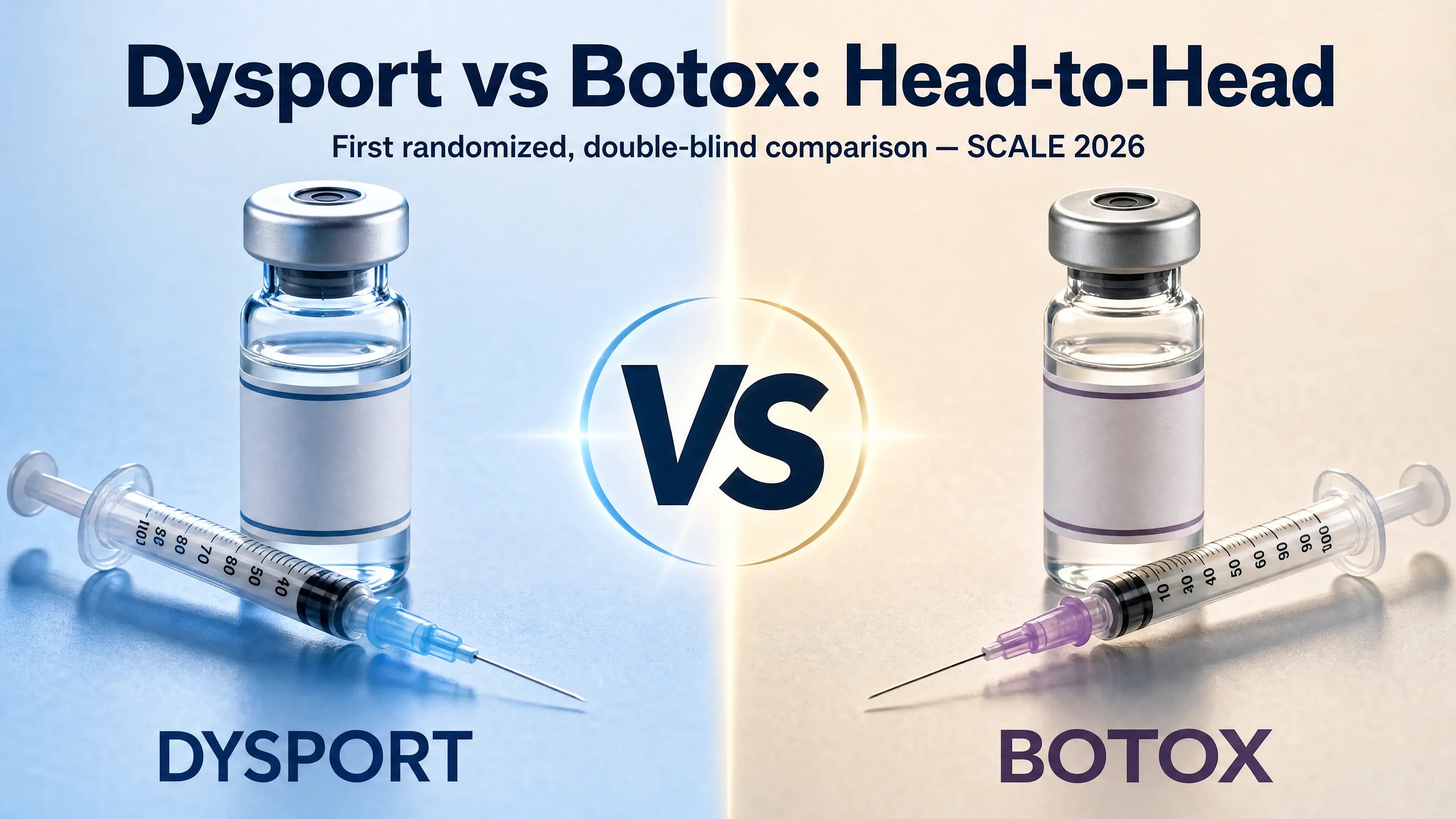
The Dysport vs Botox head-to-head, clarified: what May 2026 actually showed
No randomized Dysport vs Botox study for frown lines exists yet. The real May 2026 head-to-head compared them for spasticity; SCALE showed corabotase vs Dysport.
News"High-Fidelity Aesthetics": The 2026 Shift to Undetectable, Micro-Dosed Results
May 2026 trend coverage describes "high-fidelity aesthetics", undetectable, micro-dosed results that preserve natural movement, as the successor to the overdone "Instagram face."