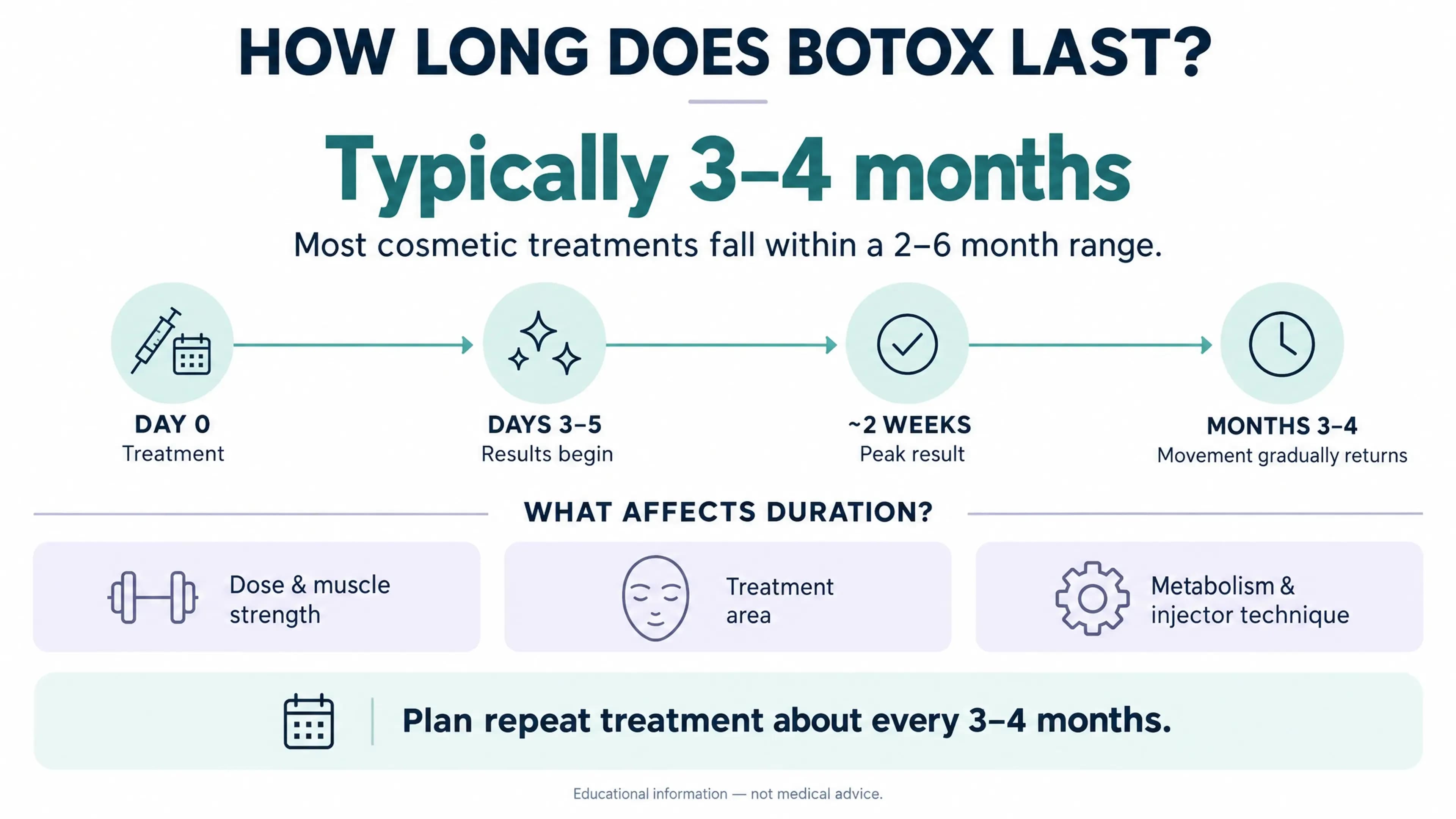
How Long Does Botox Last? Timeline, Factors & Tips (2026)
Botox lasts about three to four months on average (range two to six). Learn the full onset-to-wear-off timeline, what makes it last longer or fade faster, duration by area and brand, aftercare, and honest safety limits.
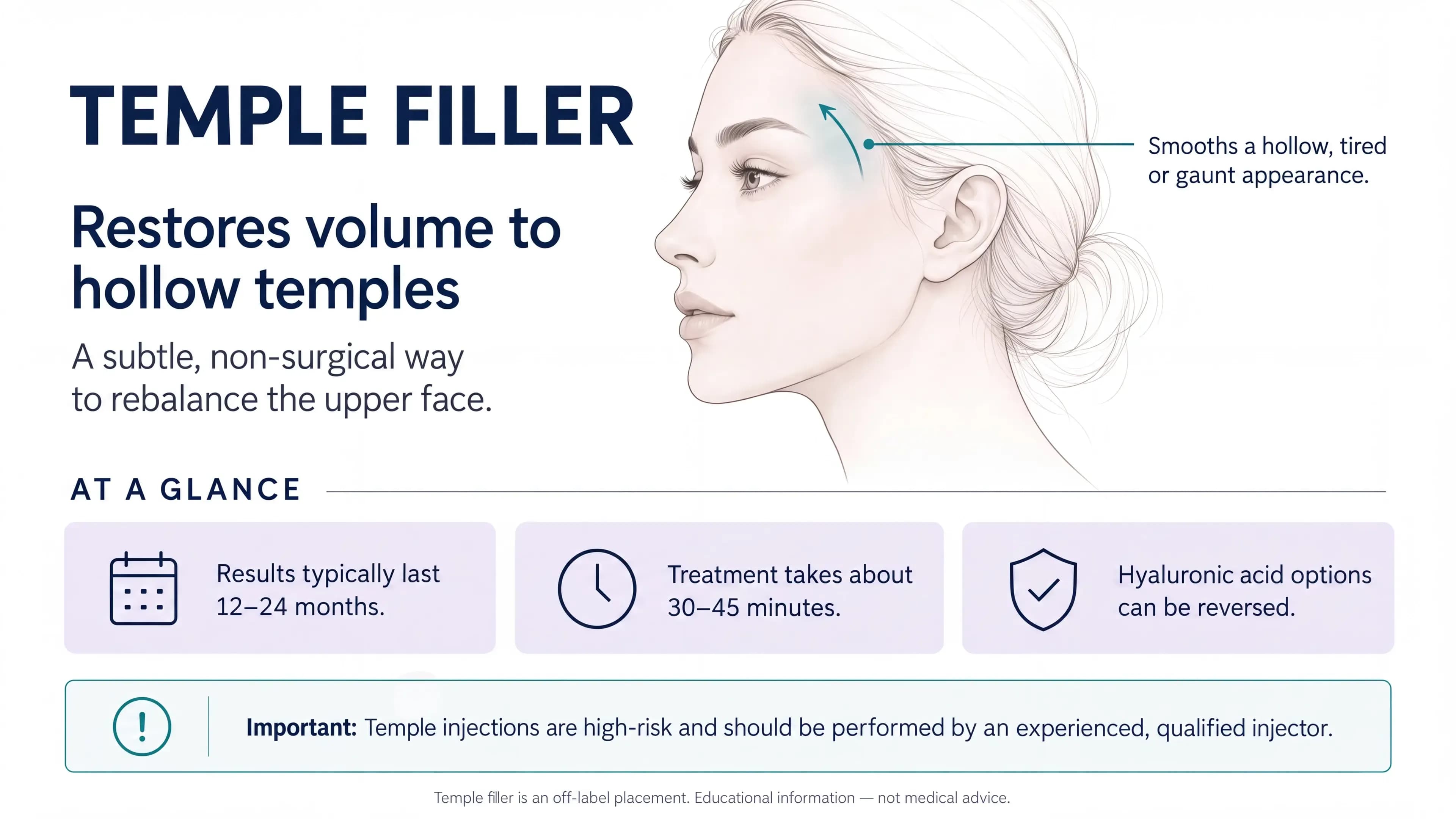
Temple Filler: Restoring Volume, Cost & Results (2026)
Temple filler restores hollow, sunken temples with hyaluronic acid or biostimulator injections, softening a gaunt look and subtly lifting the brow. Learn how it works, what it costs, how long it lasts, and the real vascular risks, clinician-reviewed.
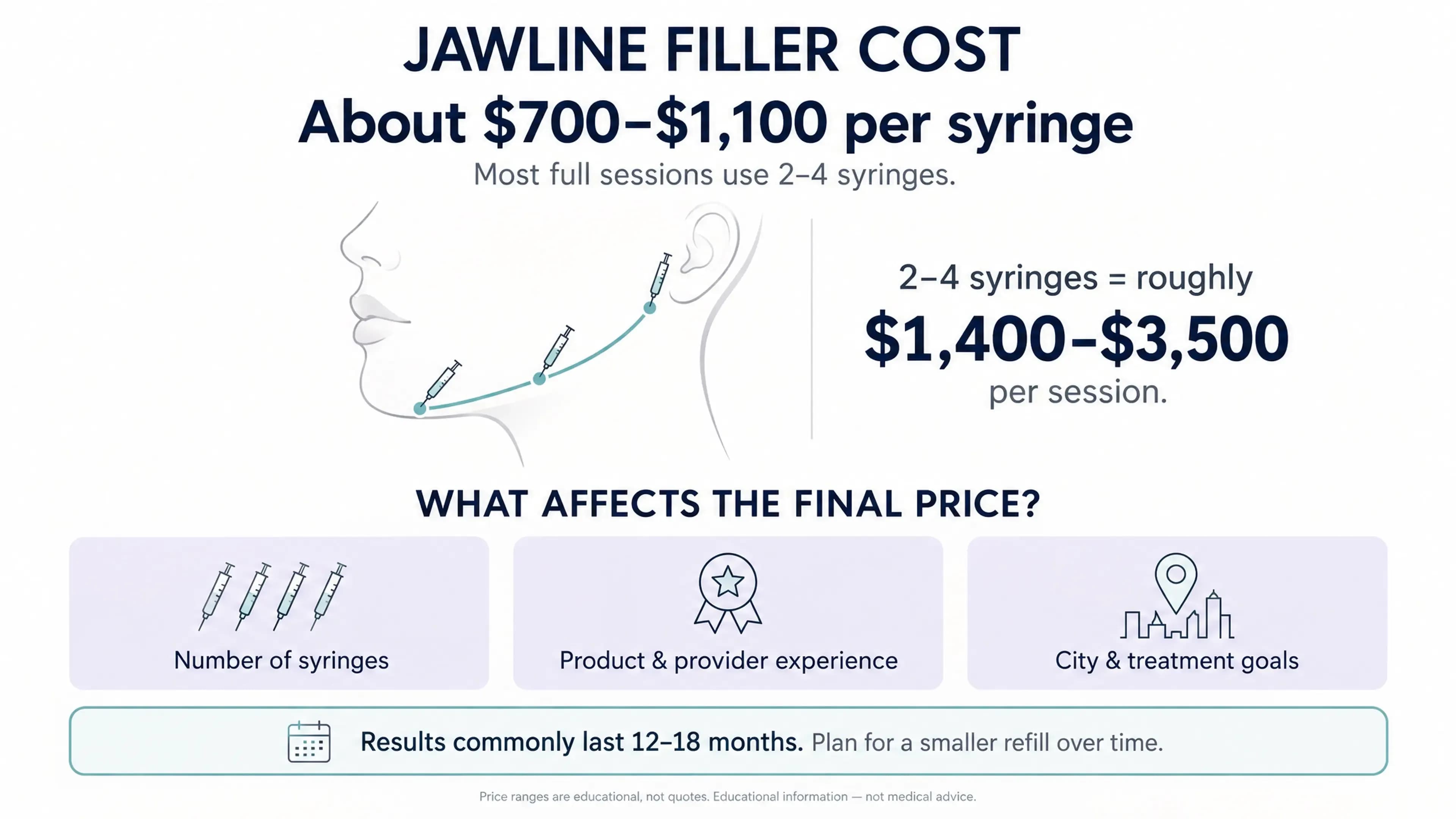
Jawline Filler Cost: Price per Syringe and Factors (2026)
Jawline filler runs about $700 to $1,100 per syringe, and most people need 2 to 4 syringes, so a session usually costs roughly $1,400 to $3,500. See what drives the price, how it compares, and how to budget.
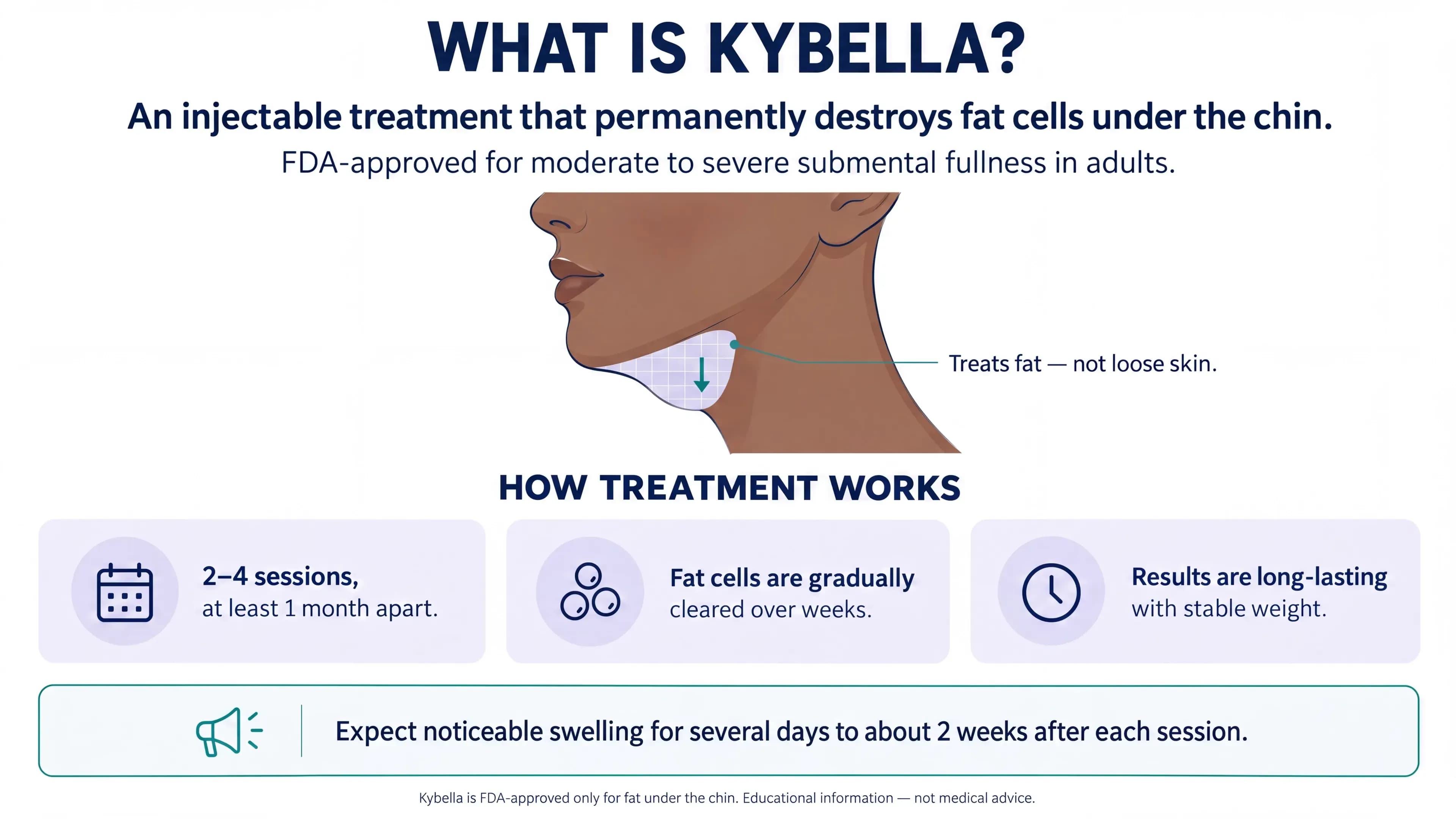
What Is Kybella? The Double-Chin Fat-Dissolving Injection (2026)
Kybella is an FDA-approved deoxycholic acid injection that permanently destroys fat cells under the chin. How it works, who it suits, the procedure, results, risks, cost, and how it compares to CoolSculpting and surgery.
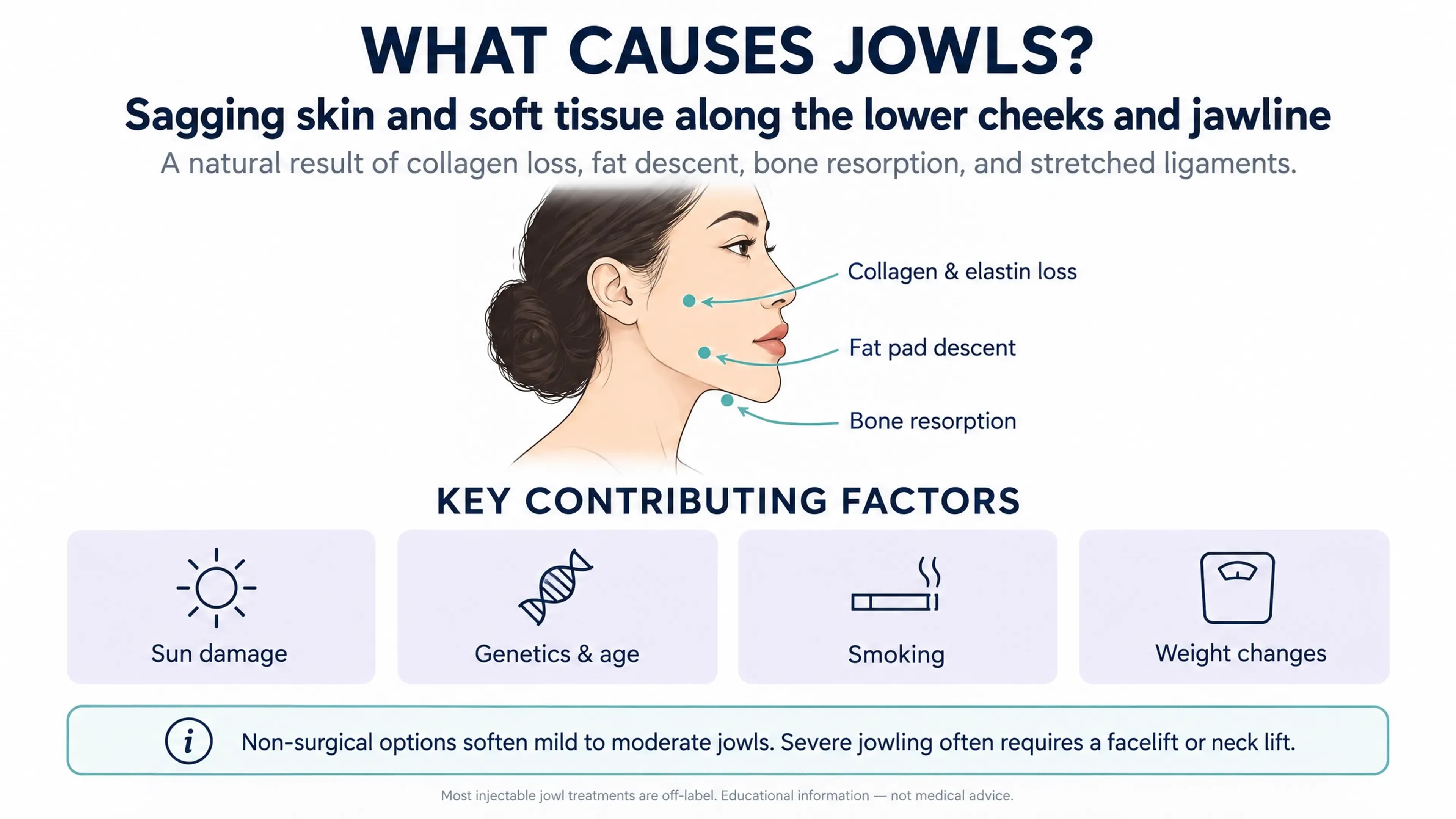
What Causes Jowls? Sagging Jawline Causes & Treatments (2026)
Jowls are sagging skin and soft tissue along the lower cheeks and jawline. Learn what causes them (skin, fat, bone, and ligament changes), who gets them and when, how to slow them, and the non-surgical and surgical treatment options.

What Is Jeuveau ("Newtox")? Cost, Duration & vs Botox (2026)
Jeuveau is prabotulinumtoxinA-xvfs, a botulinum toxin type A approved in the United States for frown lines only and nicknamed Newtox. Learn how it works, what it treats, what a treatment involves, how long it lasts, its risks and cost, and how it really compares with Botox.

PRP Plus Microneedling for Skin Renewal: How It Works, Results & Cost
PRP microneedling pairs collagen-inducing microneedling with platelet-rich plasma from your own blood. Learn how the combination works, what it treats, the real evidence, safety, downtime, cost, and how to find a qualified provider.

Turkey Neck: Causes and Nonsurgical Treatment Options (2026)
Turkey neck is loose, sagging skin and vertical bands on the front of the neck. Learn what causes it, how to slow it, and which nonsurgical treatments actually tighten neck skin, with plain FDA status on each.
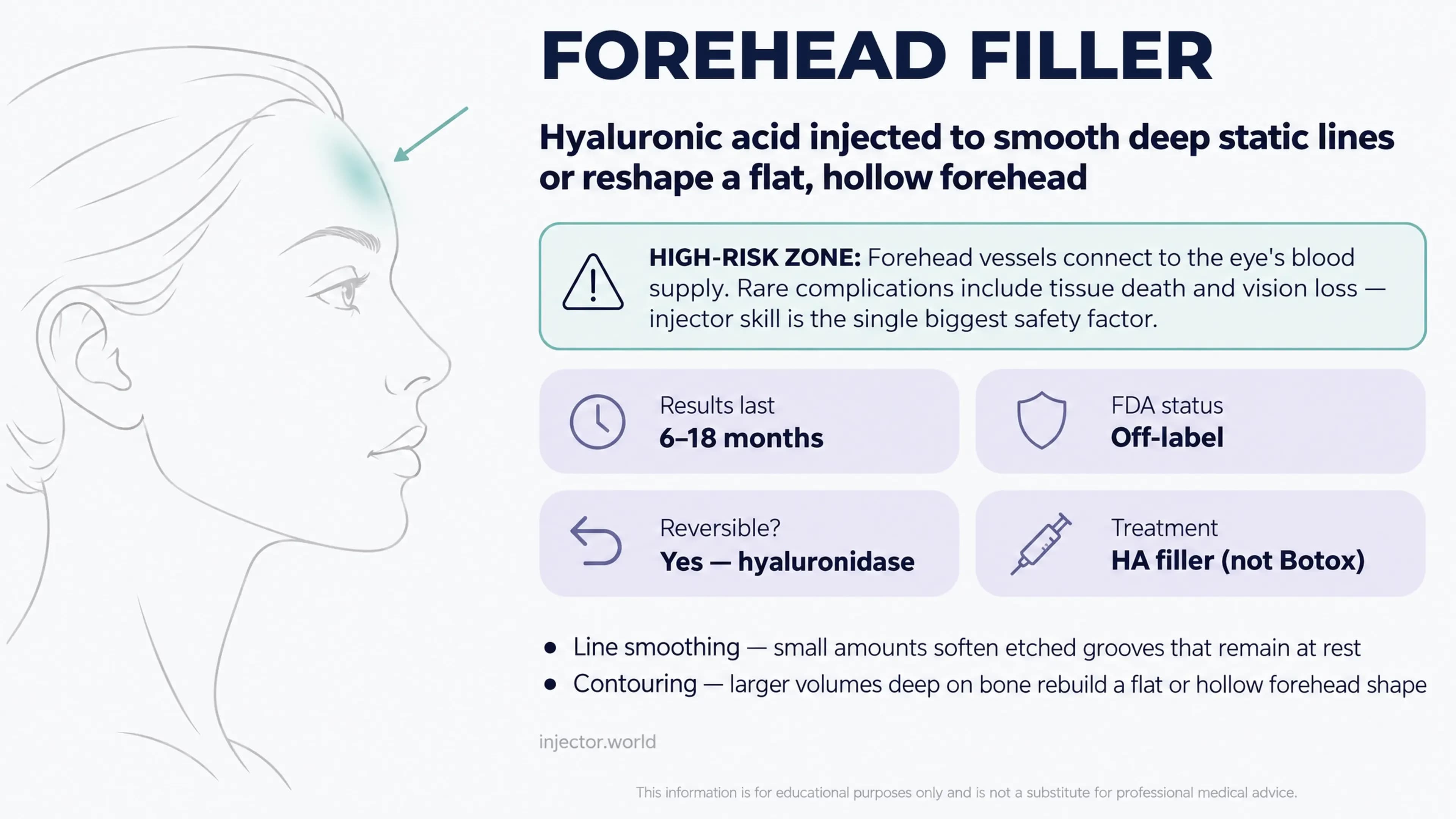
Forehead Filler: Benefits, Risks, Cost and Results (2026)
Forehead filler uses injectable dermal filler to smooth deep static lines and reshape a flat or hollow forehead. Learn how it works, who it suits, results, cost, and why the forehead is one of the highest-risk areas for filler, clinician-reviewed.

Smile Line Filler: Cost, Results and What to Expect (2026)
Smile line filler smooths the nasolabial folds with injectable hyaluronic acid or collagen-stimulating fillers. Learn how it works, what it costs, how long results last, real risks, and how to choose a safe injector.

Dermal Filler Side Effects: Common, Rare & Warning Signs (2026)
Most dermal filler side effects are mild and temporary, like swelling and bruising. A few are serious. Learn common vs rare effects, vascular occlusion, who is at higher risk, and the warning signs that need urgent care.
 Guide
GuideChin Filler: Reshaping, Cost, Results & What to Expect (2026)
Chin filler is a nonsurgical injectable that adds projection and definition to the chin. Learn how it works, which fillers are FDA-approved for the chin, how long results last, risks, cost factors, and how it compares to a chin implant, clinician-reviewed.

Botox vs Jeuveau: Cost, Results & Is "Newtox" Worth It? (2026)
Botox and Jeuveau ("Newtox") are both botulinum toxin type A with roughly 1:1 dosing and 3 to 4 month results. Botox has broader FDA approvals; Jeuveau is cosmetic-only and often cheaper. See which suits you, and why the injector matters more than the brand.
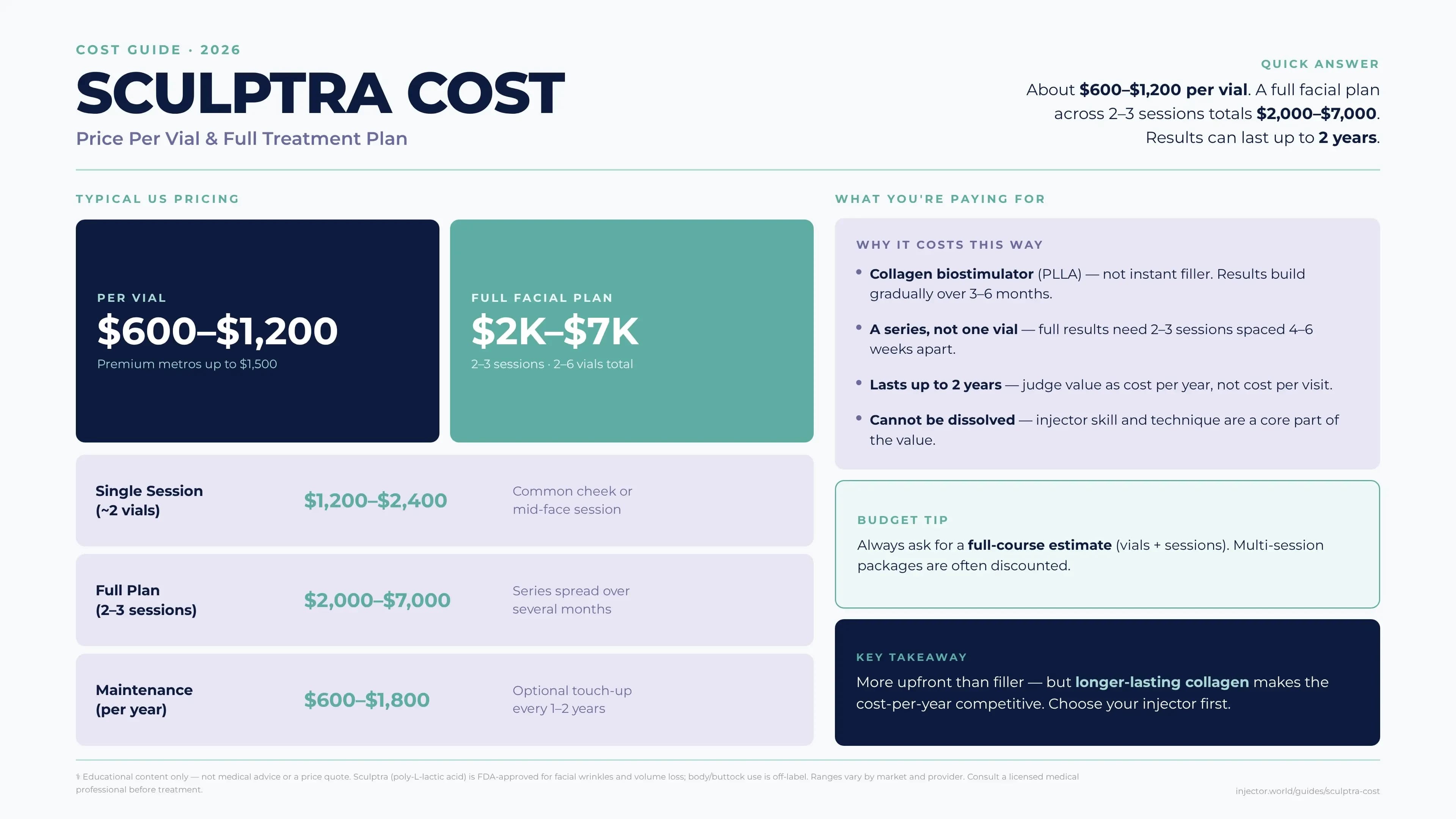
How Much Does Sculptra Cost? Price Per Vial & Full Plan (2026)
Sculptra costs about $600 to $1,200 per vial, or roughly $2,000 to $7,000 for a full plan across 2 to 3 sessions. See per-vial pricing, what drives cost, how it compares to filler, and how to judge value.
GuideHyaluronidase: How Dissolving Filler Works, Cost and Risks (2026)
Hyaluronidase is the injectable enzyme used to dissolve hyaluronic acid dermal filler. Learn how it works, what it can and cannot dissolve, the procedure, results, cost, allergy risk, and emergency use, clinician-reviewed.
GuideHow to Get Rid of a Double Chin: Causes & Treatments (2026)
A double chin is submental fullness caused by fat, genetics, weight, posture, or loose skin. Learn what actually causes it, whether it can go away, and the treatments that work, from Kybella and CoolSculpting to skin tightening and surgery.
GuideRestylane Products Explained: Lyft, Defyne, Refyne, Contour (2026)
Restylane is a family of hyaluronic acid fillers made by Galderma. This guide explains how Lyft, Defyne, Refyne and Contour differ, what each is FDA-approved to treat, how long results last, what they cost, and how to choose. Clinician-reviewed.
GuideMicroneedling Cost: Price per Session & What Affects It (2026)
Microneedling costs about $200 to $700 per session, roughly $300 to $400 for a standard full face. Because collagen builds slowly, most people need three to six sessions. See what drives the price, how it compares, and how to budget for a full course.
GuideHow Much Does Botox Cost? Price Per Unit & By Area (2026)
Botox costs about $10 to $18 per unit, or roughly $200 to $600 per session (ASPS reports a $435 average). Learn cost by area, units, the factors that move the price, and how to find a qualified injector.
GuideWhat Causes Tear-Trough Hollows? Anatomy, Causes & Treatments (2026)
Tear-trough hollows are the shadowed grooves under the eyes. Learn what causes them (anatomy, fat and bone loss, thin skin), who gets them and when, how to slow them, and the treatment options from filler to surgery.
GuideNasolabial Fold Filler: Cost, Results & What to Expect (2026)
Nasolabial fold filler uses hyaluronic acid or biostimulator gel to soften the lines from the nose to the mouth. Learn how it works, what it costs, how long it lasts, and the real risks, clinician-reviewed.
GuidePRP vs PRF: Differences, Cost & Which Is Right (2026)
PRP and PRF are both made from your own blood. PRP is spun fast with an anticoagulant and releases growth factors quickly; PRF is spun slower with no additives and releases them over days. Compare mechanism, results, safety, cost and fit, clinician-reviewed.
GuideKybella vs CoolSculpting for a Double Chin: Which Is Better? (2026)
Kybella is an FDA-approved injection that dissolves under-chin fat. CoolSculpting is an FDA-cleared device that freezes it. A clinician-reviewed comparison of mechanism, candidacy, evidence, risks and cost.
GuideLip Flip: What It Is, Cost, Results & Botox vs Filler (2026)
A lip flip uses a few units of Botox to relax the upper lip so it rolls outward and looks fuller, without adding volume. Learn how it works, cost, how long it lasts, risks, and how it compares with lip filler, clinician-reviewed.
GuideWhat Causes Forehead Wrinkles? Causes, Prevention & Treatments (2026)
A complete, honest guide to forehead wrinkles: the muscle, aging, and sun causes behind them, who develops them and when, how to prevent or slow them, and every treatment option from Botox to resurfacing, with plain FDA status, realistic results, risks, and cost ranges.
GuideWhat Is Dysport? Uses, Cost, Results & How It Compares (2026)
Dysport (abobotulinumtoxinA) is an FDA-approved botulinum toxin type A injectable that relaxes muscles to soften frown lines. Learn how it works, what it treats, results, safety, cost, and how it compares to Botox.
GuideHow Much Does Kybella Cost? Per Vial, Per Session & Total (2026)
Kybella runs about $600 to $900 per vial and $1,200 to $1,800 per session, with 2 to 4 sessions ($2,400 to $6,000) typical. See what drives the price, how it compares, and whether it is worth it.
GuideUnder-Eye Hollows: Causes, Treatments & Tear Trough Filler (2026)
Under-eye hollows come from fat and bone volume loss, thin eyelid skin, and genetics. Learn what causes them, which fillers are actually FDA-approved for the under-eye, what results and risks are realistic, and when surgery is the better answer.
GuideDysport vs Jeuveau: Differences, Cost & Which Is Right (2026)
Dysport and Jeuveau are both botulinum toxin type A approved for frown lines. Dysport uses 50 units and has medical approvals; Jeuveau uses 20 units and is cosmetic only. Compare onset, duration, safety, and cost.
GuideDysport Results: Onset, How Long It Lasts & What to Expect (2026)
Dysport results start in 2 to 3 days, peak at 10 to 14 days, and last about 3 to 4 months. See the full day-by-day timeline, what is normal versus concerning, dosing, cost factors, and how Dysport compares to Botox. Medically reviewed.
GuideKybella Side Effects: Swelling, Nerve Risk & What to Expect (2026)
Swelling under the chin affects roughly 87 percent of Kybella patients, and about 4 percent get a temporary uneven smile from nerve irritation. This guide separates normal recovery from real warning signs, with the recovery timeline, who is at higher risk, and how to lower yours.
GuideBotox for Migraines: How It Works, Cost & Results (2026)
Botox is FDA-approved to prevent chronic migraine (15+ headache days a month). Learn how it works, the 31-injection protocol, realistic results, side effects, and what it costs, clinician-reviewed.
GuideFiller Migration: What It Is, Signs, and How to Fix It (2026)
Filler migration is when dermal filler moves away from where it was injected, creating lasting lumps, puffiness, or a blurred contour. Learn the causes, the warning signs, which fillers and areas migrate most, how it is corrected with hyaluronidase, and how to prevent it.
GuideWhat Is PRP? Platelet-Rich Plasma Uses, Cost, Evidence & Safety (2026 Guide)
PRP (platelet-rich plasma) uses a concentrated dose of your own blood platelets to stimulate healing in skin, hair, and joints. Learn how it works, what the evidence actually shows, cost, and safety, clinician-reviewed.
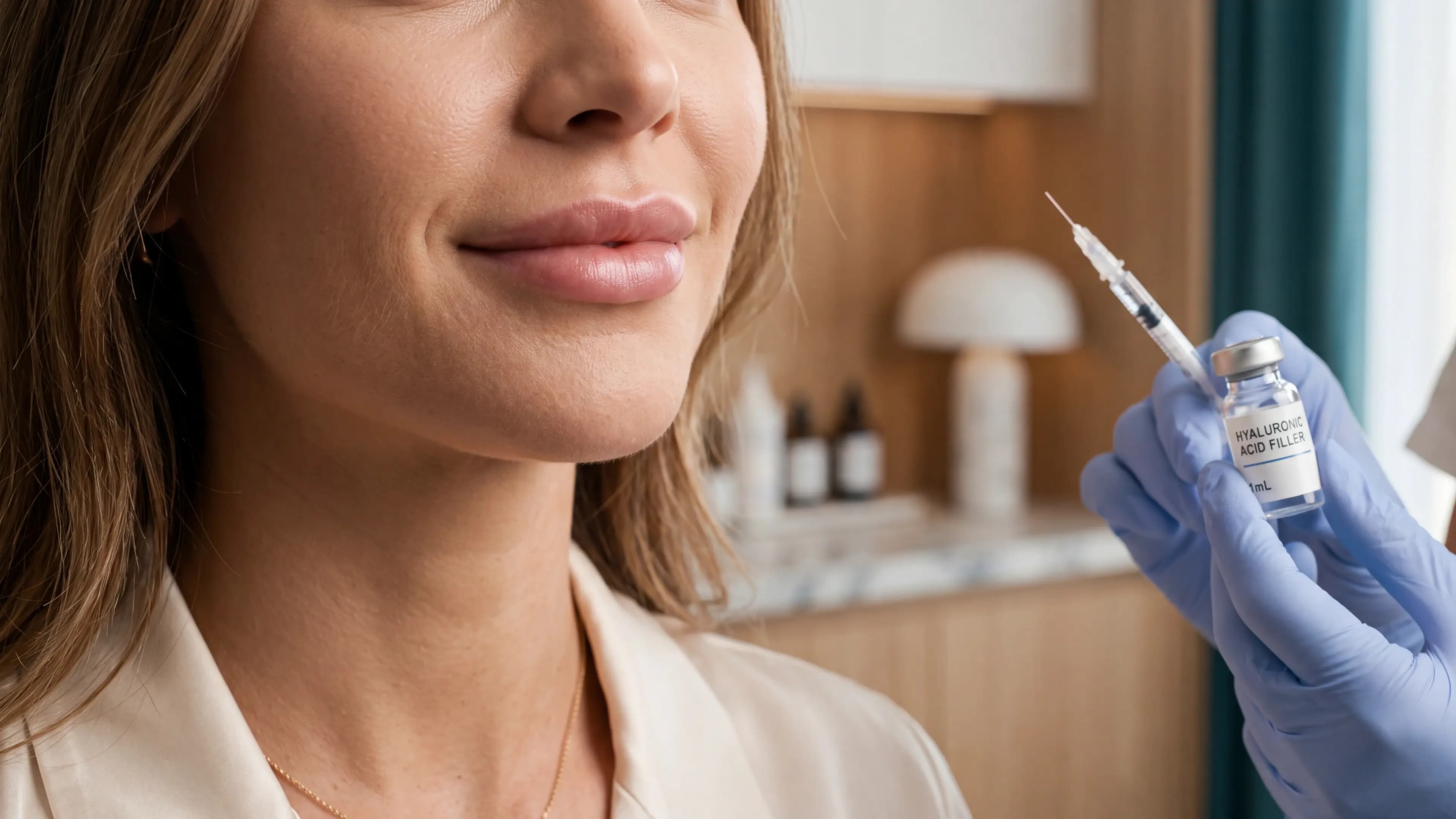
Lip Filler: Cost, How Long It Lasts, Types & What to Expect (2026)
Lip filler is hyaluronic-acid gel injected to add volume and shape to the lips. A complete, clinician-reviewed guide to how it works, FDA-approved products, results and duration, risks, alternatives, and cost.
GuideExosomes for Hair Loss: Evidence, Safety and FDA Status (2026)
Exosomes are an experimental regenerative treatment for hair loss. Early studies show density gains, but there are no FDA-approved exosome products, and long-term safety is unproven. Here is the honest, evidence-based picture.
GuideCheek Filler Cost: Price per Syringe and What Affects It (2026)
Cheek filler usually costs about $600 to $1,200 per syringe, with a national average near $700 to $900. Most plans use 1 to 3 syringes. See what drives the price, how products compare, and how to budget.
GuideNefertiti Lift: Botox for the Jawline and Neck Explained (2026)
The Nefertiti lift is a non-surgical treatment that uses Botox, off-label, along the jawline and neck to relax the downward-pulling platysma muscle, sharpening jaw definition and softening neck bands. Learn how it works, who it suits, results, risks, and cost.
GuideWhat Is Daxxify? The Long-Lasting Botox Alternative (2026)
Daxxify is a botulinum toxin type A injectable stabilized with a peptide instead of albumin, with results that often last about six months, longer than Botox. Learn how it works, what it treats, the procedure, safety, cost, and how it compares.
GuideLip Flip vs Lip Filler: Cost, Results & Which Is Right for You (2026)
A lip flip uses a few units of botulinum toxin, off label, to roll the upper lip outward without adding volume. Lip filler injects FDA approved hyaluronic acid gel to add real size and shape. Compare mechanism, onset, duration, candidacy, risks and honest cost ranges, clinician reviewed.
GuideWhat Is Restylane? Products, Uses, Cost & How Long It Lasts (2026)
Restylane is a family of FDA-approved hyaluronic acid dermal fillers from Galderma that add instant, reversible volume to lips, cheeks, folds, chin, hands, and undereye hollows. See every product, what it treats, real cost ranges, risks, and how long results last.
GuideDimpled Chin (Orange-Peel Chin): Causes & Botox Treatment (2026)
A dimpled, orange-peel chin comes from an overactive mentalis muscle bunching the skin. See what causes it, how it differs from a genetic cleft chin, and how off-label Botox smooths it.
GuideBiostimulator Fillers Explained: Sculptra, Radiesse & More (2026)
Biostimulators are injectables that trigger your own collagen instead of just adding gel. Learn how Sculptra and Radiesse work, what they treat, FDA status, results, risks, cost, and how to choose a provider.
GuideSculptra vs Fillers: Is Sculptra a Filler & Which Is Better? (2026)
Sculptra rebuilds your own collagen gradually and lasts about two years; HA fillers add instant, reversible volume for 6 to 18 months. A clinician-reviewed comparison of mechanism, results, risks, and cost.
GuideSculptra Results: What to Expect and When (2026)
Sculptra works gradually. See the real timeline, when results appear, how long they last, what affects them, and how to protect your outcome with a skilled injector.
GuideWhat Is PRF? Platelet-Rich Fibrin Uses, Benefits & Cost (2026)
PRF (platelet-rich fibrin) is a treatment made from your own blood, spun to concentrate platelets and a fibrin scaffold that releases growth factors to support healing, collagen and tissue repair. See uses, results, safety, cost and how it compares to PRP.
GuideJuvederm Products Explained: Voluma, Volbella, Vollure, Volux (2026)
Juvederm Voluma, Volbella, Vollure, and Volux are hyaluronic acid fillers in Juvederm's VYCROSS collection, each FDA-approved for a different area. Learn what each treats, how long results last, safety, cost, and how to pick the right one, clinician-reviewed.
GuideBunny Lines: What Causes Them & How Botox Treats Them (2026)
Bunny lines are the diagonal wrinkles that appear across the nose when you scrunch or smile, driven by the nasalis muscle. Learn what causes them, who gets them, how to slow them, and how Botox (used off-label) softens them.
GuideWhat Is Microneedling? Benefits, Cost, Results & Safety (2026)
Microneedling, or collagen induction therapy, uses fine needles to trigger the skin's natural repair and build collagen. Learn how it works, what it treats, results timelines, real risks, cost factors, and how it compares to alternatives, clinician-reviewed.
GuideWhat Are Dermal Fillers? Types, Uses, Cost & Safety (2026 Guide)
Dermal fillers are injectable gels that restore lost volume, soften folds, and reshape lips, cheeks, chin, and jawline. Compare every filler type, FDA-approved and off-label uses, the real risks, how long results last, and 2026 cost ranges.
GuideWhat Is Xeomin? The Naked Botox Alternative (2026)
Xeomin (incobotulinumtoxinA) is the purified, naked botulinum toxin, filtered to remove the complexing proteins other brands carry. Learn how it works, what it treats, results, safety, cost, and how it compares to Botox, Dysport, and Daxxify.
GuideNasolabial Folds: Causes, Treatments & Filler Options (2026)
Nasolabial folds are the smile lines running from the sides of the nose to the corners of the mouth. Learn what causes them, how to slow them, and the filler, biostimulator, and thread options that soften them.
GuideBotox vs Dermal Fillers: Differences, Cost & Which to Choose (2026)
Botox relaxes muscles to soften movement wrinkles; dermal fillers add volume to restore lost fullness and fill folds. They treat different problems, and many people use both. Compare how they work, onset, duration, FDA status, safety, and cost.
GuideXeomin vs Jeuveau: Differences, Cost & Which Is Right for You (2026)
Xeomin and Jeuveau are both botulinum toxin type A wrinkle injectables with similar results and 3 to 4 month duration. Xeomin is a purified, protein-free formula also FDA-approved for medical uses; Jeuveau is cosmetic-only with slightly faster onset. See the real differences, cost, and which suits you.
GuidePreventative Botox vs Waiting: Which Is Right for You? (2026)
Preventative Botox starts small neuromodulator doses early to stop expression lines etching in. The mechanism is plausible but the prevention evidence is thin, and Botox is FDA approved for lines that already exist. Compare starting early against waiting on evidence, candidacy, safety, long term unknowns and lifetime cost, clinician reviewed.
GuideWhat Is Juvederm? Products, Uses, Cost & How Long It Lasts (2026)
Juvederm is a family of FDA-approved hyaluronic acid fillers that add instant, reversible volume to lips, cheeks, chin, and jawline. See every product, what it treats, real cost ranges, risks, and how long results last.
GuideBotox Aftercare and Recovery Guide: What to Do, Hour by Hour
A complete, evidence-based Botox aftercare guide: the 4-hour rule, what to avoid for the first 24 hours, warning signs worth a call, and when results appear and how long they last.
GuideHand Filler and Rejuvenation: Options, Cost and Results (2026)
Hand filler restores lost volume to the backs of aging hands, softening prominent veins, tendons, and bones. Learn the options and their FDA status, how the procedure works, results, duration, real risks, and cost, clinician-reviewed.
GuideOzempic Face: Causes and How Injectables Restore Volume (2026)
Ozempic face is the hollow, sagging, more wrinkled look that can follow rapid GLP-1 weight loss. Learn what causes it, who gets it, how to slow it, and how fillers and biostimulators like Sculptra restore volume.
GuideDaxxify Cost: Price per Treatment & What Affects It (2026)
Daxxify costs about $8 to $25 per unit, most often $8 to $15, or roughly $400 to $800 for a standard 40-unit frown-line session. See per-unit and per-vial prices, what drives cost, how it compares to Botox, and how to budget and find a qualified provider.
GuideBotox vs Dysport: Differences, Cost & Which Is Better (2026)
Botox and Dysport are both botulinum toxin type A. Dysport starts slightly faster and spreads more; Botox stays localized and has broader cosmetic FDA approval. Compare onset, duration, formulation, safety, and real cost, then find a qualified injector.
GuideChin Filler Cost: Price, Factors and What to Expect (2026)
Chin filler costs about $650 to $2,000 per session, often $700 to $900 per syringe, with most people needing one to two syringes. See cost by factor, what drives the price, how it compares to a chin implant, and how to budget.
GuideMarionette Lines: Causes, Fillers & Treatment Options (2026)
Marionette lines run from the corners of the mouth toward the chin. Learn what causes them, how to slow them, and which fillers, biostimulators, and other treatments actually help.
GuideRestylane Kysse: Lip Filler Benefits, Cost & Results (2026)
Restylane Kysse is an FDA-approved hyaluronic acid lip filler built for natural, flexible movement. See what it treats, who it suits, the procedure, how long results last, real risks, and cost.
GuideWhat Is Radiesse? The Collagen-Stimulating Filler Explained (2026)
Radiesse is an FDA-approved calcium hydroxylapatite filler that adds instant volume and stimulates your own collagen. See how it works, what it treats, results, risks, cost, and how it compares.
GuideHow Many Units of Botox Do You Need? By Area (2026)
How many units of Botox you need is set by the muscle treated, its strength, and your goal. FDA labeling gives 20 units for frown lines, 20 for the forehead, and 24 for crow's feet. See the full unit ranges by area, plus off-label doses and what moves your number.
GuideDysport vs Daxxify: Cost, Duration & Which Is Right (2026)
Dysport and Daxxify are both FDA approved botulinum toxin type A injections for frown lines. Dysport is the older, broader spreading, cheaper per session option; Daxxify is peptide stabilized and held results a median of about 24 weeks, close to six months, in its trials. Compare formulation, onset, duration, FDA approvals, safety, honest cost ranges and how to choose, clinician reviewed.
GuidePRP for Hair Loss: How It Works, Results, Cost and Evidence (2026)
PRP for hair loss injects a concentrate of your own blood platelets into the scalp to prolong the growth phase. Learn how it works, who it helps, realistic results, side effects, cost, and what the evidence actually shows, clinician-reviewed.
GuideSmile Lines: The 5 Types, Where Each Sits, and How Each Is Treated (2026)
Smile lines is a catch all name for several different creases: vertical lip lines, mouth corner lines, crow's feet, cheek accordion lines, and the nasolabial fold. Work out which one you actually have, what causes it, and which treatment matches it.
GuideSculptra vs Radiesse: Differences, Cost & Which Is Right (2026)
Sculptra and Radiesse are both collagen biostimulators, not classic hyaluronic acid fillers. Radiesse lifts the same day and lasts about 12 to 18 months; Sculptra builds volume gradually and can hold for two years. A clinician-reviewed comparison of mechanism, FDA status, risks, cost and candidacy.
GuideNeuromodulators Compared: Botox vs Dysport vs Daxxify vs Jeuveau vs Xeomin
A clinician-reviewed comparison of the five FDA-approved wrinkle-relaxing neuromodulators: how Botox, Dysport, Daxxify, Jeuveau, and Xeomin differ on onset, duration, formulation, spread, FDA approvals, and cost, and how to choose.
GuideSunken Cheeks: Causes, Cheek Filler & Treatment Options (2026)
Sunken cheeks are a hollow, flattened look in the midface from lost fat, collagen, and bone. Learn what causes them, who develops them, and how cheek filler, biostimulators, and fat transfer restore lost volume, clinician-reviewed.
GuideWhat Is Botox? How It Works, Uses, Cost & Safety (2026 Guide)
Botox is a prescription injectable made from purified botulinum toxin type A that temporarily relaxes muscles to soften wrinkles. This complete guide covers how it works, what it treats, the procedure, results, safety and risks, how it compares with alternatives, and cost.
GuideNeck Bands (Platysmal Bands): Causes & Botox Treatment (2026)
Neck bands, or platysmal bands, are vertical cords caused by the platysma muscle and aging skin. Learn what causes them, how to slow them, and every treatment from Botox to surgery, with plain FDA status.
GuideHooded Eyes: Causes, Botox Brow Lift & Treatment Options (2026)
Hooded eyes are an eye shape where excess skin from the brow bone folds over the upper eyelid crease. Learn what causes them, whether they worsen with age, and how Botox brow lifts, blepharoplasty, and energy devices compare.
GuideLip Filler Cost: Price by Type, Area & What Affects It (2026)
Lip filler in the U.S. typically costs about $600 to $1,000 per syringe, with national averages near $650 to $960 per treatment. See price by amount, brand and location, plus how to budget and find a qualified injector.
GuideHow Long Do Dermal Fillers Last? By Type & Area (2026)
Most dermal fillers last about 6 to 18 months, and biostimulators 2 years or more. See duration by filler material and facial area, what changes your personal timeline, what the imaging evidence really shows, and how to make each treatment last longer.
GuideJuvederm vs Restylane: Differences, Cost & Which Is Better (2026)
Juvederm and Restylane are both FDA approved hyaluronic acid filler families, not single products. Juvederm gels run smoother and more cohesive; Restylane NASHA gels are firmer and hold their shape. Compare cross-linking technology, FDA approved areas, duration, lip and cheek options, risks and honest cost ranges, clinician reviewed.
GuideMasseter Botox Cost: Price per Session and What Affects It (2026)
Masseter Botox costs about $400 to $1,200 per session, averaging $600 to $800 for both sides of the jaw. See per-unit pricing, what drives cost, how it compares to jaw filler and surgery, and how to find a qualified injector.
GuideWhat Causes Frown Lines (11s)? Causes, Prevention & Treatments (2026)
Frown lines, the vertical '11s' between your brows, come from repeated muscle movement, sun damage, and collagen loss. Learn what causes them, who gets them and when, how to slow them, and every treatment option from Botox to resurfacing.
GuideJawline Filler: Benefits, Cost, Results & What to Expect (2026)
Jawline filler sharpens and defines the lower face with injectable gel. Learn how it works, which products are FDA-approved, what it costs, how long results last, the real risks, and how to choose a safe injector.
GuideLip Lines & Smoker's Lines: Causes and Treatment Options (2026)
Lip lines, also called perioral or smoker's lines, are the vertical wrinkles on and above the lips. Learn what causes them, who gets them, how to slow them, and how fillers, Botox, lasers, and microneedling treat them, with honest FDA status.
GuideUnder-Eye Filler: Benefits, Cost, Risks & Results (2026)
Under-eye filler uses hyaluronic acid gel to soften hollows and tear-trough shadows. Learn how it works, who it suits, the off-label FDA status, realistic results, cost factors, and the specific risks that make this one of the most technique-sensitive areas of the face.
GuideHow Much Do Dermal Fillers Cost? Price by Type & Area (2026)
Dermal fillers cost about $600 to $1,200 per syringe ($715 ASPS average for hyaluronic acid). See cost by filler type and area, what moves the price, and how to choose a qualified injector.
GuideBotox Side Effects: Common, Rare & How to Avoid Them (2026)
Most Botox side effects are mild and temporary. This guide separates normal from concerning, names the rare serious risks and the FDA boxed warning, and shows how the right injector and simple aftercare keep your risk low.
GuideMasseter Botox: Jaw Slimming & TMJ Relief Explained (2026)
Masseter Botox relaxes the large chewing muscle at the jaw angle to slim a square jawline and ease clenching, grinding, and TMJ tension. Learn how it works, results, risks, cost, and candidacy, clinician-reviewed.
GuideFestoons (Malar Bags): Causes and Treatment Options (2026)
Festoons, also called malar bags or malar mounds, are sagging pouches of skin and fluid on the upper cheek just below the lower eyelid. Learn what causes them, why they appear, and which surgical and non-surgical treatments actually help.
GuideLiquid Rhinoplasty: The Nonsurgical Nose Job Explained (2026)
Liquid rhinoplasty reshapes the nose with injectable dermal filler instead of surgery. Learn how it works, what it can and cannot fix, how long it lasts, the real vascular risks, cost factors, and who is a candidate. Clinician-reviewed.
GuideHow Long Does Juvederm Last? By Product and Area (2026)
Juvederm lasts about 6 months to 2 years depending on the product and area. Lips run 6 to 12 months, cheeks up to 2 years. See duration by product, what makes it fade faster, and how to maintain results, clinician-reviewed.
GuideWhat Is SkinVive? The Injectable Skin Booster Explained (2026)
SkinVive by Juvederm is an FDA-approved hyaluronic acid skin booster injected as microdroplets to improve cheek and neck skin smoothness, hydration, and glow, not to add volume. See how it works, results, cost, safety, and how it compares.
GuideWhat Is Sculptra? The Collagen-Building Injectable (2026)
Sculptra is an injectable poly-L-lactic acid biostimulator that prompts your body to rebuild its own collagen for gradual, natural volume that can last two years or more. Learn how it works, what it treats, the risks, and what it costs.
GuideBotox vs Xeomin: The "Naked Toxin" Compared (2026)
Botox and Xeomin are both botulinum toxin type A. Xeomin is the purified naked toxin, free of complexing proteins. Compare formulation, onset, units, FDA approvals, safety, and cost, and learn how to choose.
GuideCrow's Feet: Causes, Botox & Treatment Options (2026)
Crow's feet are the fine lines at the outer corners of the eyes. Learn what causes them, who gets them earliest, how to prevent them, and every treatment from Botox to lasers, with plain FDA status.
GuideCheek Filler: Benefits, Cost, Results & What to Expect (2026)
Cheek filler restores midface volume and defines the cheekbones with an injectable gel. Learn how it works, which fillers are FDA-approved, what results and recovery look like, real risks, cost factors, and how to choose a safe injector.
GuideDoes Botox Hurt? What to Expect During and After (2026)
Botox injections cause only brief, mild discomfort for most people, usually a quick pinch or sting rated about 1 to 2 out of 10. Learn what it feels like by area, how to reduce pain, and what is normal afterward.
GuideJuvederm Cost and Value Explained: Price Per Syringe (2026)
Juvederm typically costs about $600 to $1,200 per syringe, with premium formulas up to $1,500. See what drives the price, how it compares to Botox and other fillers, and whether it is worth it.
GuideIs Botox Safe? Risks, Side Effects and Who Should Avoid It (2026)
Is Botox safe? It is FDA-approved and low-risk when a licensed injector uses genuine product at the right dose. See the real side effects, the rare dangers, who should avoid it, and how to lower your risk.
GuideDysport Cost and Value Explained: Per Unit, Per Session (2026)
Dysport typically costs about $4 to $8 per unit, or roughly $300 to $500 per session. Learn what drives the price, how it compares with Botox, and when it is worth it.
GuideBotox vs Daxxify: Duration, Cost & Which Lasts Longer (2026)
Botox and Daxxify are both botulinum toxin type A, but Daxxify is built to last longer, often around six months versus three to four for Botox. Compare onset, formulation, FDA approvals, safety, and cost to decide which fits you.
GuideUnder-Eye Bags: Causes, Filler, and Treatment Options (2026)
Under-eye bags are mild puffiness below the eyes, usually from aging, fat prolapse, fluid retention, allergies, or genetics. Learn what causes them, whether they go away, and how filler, surgery, and skincare compare, with plain FDA status.